
Education Support
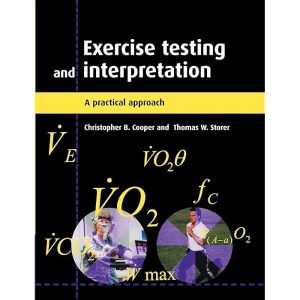
Cooper CB, Storer TW. Exercise Testing and Interpretation – A Practical Approach, Cambridge University Press, 2010.
Cooper CB. Exercise testing does not have to be complicated. Chronic Respir Dis 2006; 3: 1-2.

Scientific References
This is a bibliography of scientific references used to generate the enhancedCPETanalytics™ report.
- Cooper CB, Storer TW. Exercise testing and interpretation. A practical approach.: Cambridge University Press; 2001.
- Cooper CB. Exercise testing does not have to be complicated. Chron Respir Dis. 2006;3(2):107-108.
- Whipp BJ. Rate constant for the kinetics of oxygen uptake during light exercise. J Appl Physiol. 1971;30(2):261-263
- Buchfuhrer MJ, Hansen JE, Robinson TE, Sue DY, Wasserman K, Whipp BJ. Optimizing the exercise protocol for cardiopulmonary assessment. J Appl Physiol. 1983;55(5):1558-1564.
- Whipp BJ, Davis JA, Torres F, Wasserman K. A test to determine parameters of aerobic function during exercise. J Appl Physiol Respir Environ Exerc Physiol. 1981;50(1):217-221.
- Neufeld EV, Dolezal BA, Speier W, Cooper CB. Effect of altering breathing frequency on maximum voluntary ventilation in healthy adults. BMC pulmonary medicine. 2018;18(1):89.
- Hankinson JL, Odencrantz JR, Fedan KB. Spirometric reference values from a sample of the general U.S. population. Am J Respir Crit Care Med. 1999;159(1):179-187.
- Quanjer PH, Stanojevic S, Cole TJ, et al. Multi-ethnic reference values for spirometry for the 3-95-yr age range: the global lung function 2012 equations. Eur Respir J. 2012;40(6):1324-1343.
- Tanaka H, Monahan KD, Seals DR. Age-predicted maximal heart rate revisited. J Am Coll Cardiol. 2001;37(1):153-156.
- Orr GW, Green HJ, Hughson RL, Bennett GW. A computer linear regression model to determine ventilatory anaerobic threshold. J Appl Physiol Respir Environ Exerc Physiol. 1982;52(5):1349-1352.
- Beaver WL, Wasserman K, Whipp BJ. A new method for detecting anaerobic threshold by gas exchange. J Appl Physiol (1985). 1986;60(6):2020-2027.
- Dolezal BA, Storer TW, Neufeld EV, Smooke S, Tseng CH, Cooper CB. A Systematic Method to Detect the Metabolic Threshold from Gas Exchange during Incremental Exercise. J Sports Sci Med. 2017;16(3):396-406.
- Cooper CB, Beaver WL, Cooper DM, Wasserman K. Factors affecting the components of the alveolar CO2 output-O2 uptake relationship during incremental exercise in man. Exp Physiol. 1992;77(1):51-64.
- Riley M, Wasserman K, Fu PC, Cooper CB. Muscle substrate utilization from alveolar gas exchange in trained cyclists. Eur J Appl Physiol Occup Physiol. 1996;72(4):341-348.
- Sirichana W, Neufeld EV, Wang X, Hu SB, Dolezal BA, Cooper CB. Reference Values for Chronotropic Index from 1280 Incremental Cycle Ergometry Tests. Med Sci Sports Exerc. 2020;52(12):2515-2521.
- Davis JA, Storer TW, Caiozzo VJ. Prediction of normal values for lactate threshold estimated by gas exchange in men and women. Eur J Appl Physiol Occup Physiol. 1997;76(2):157-164.
- Astrand I, Astrand PO, Hallback I, Kilbom A. Reduction in maximal oxygen uptake with age. J Appl Physiol. 1973;35(5):649-654.
- AHA medical/scientific statement. 1994 revisions to classification of functional capacity and objective assessment of patients with diseases of the heart. Circulation. 1994;90(1):644-645.
- Cooper CB, Dolezal BA, Riley M, Verity MA, Shieh PB. Reverse fiber type disproportion: A distinct metabolic myopathy. Muscle & nerve. 2016;54(1):86-93.
- Borg G. Perceived exertion as an indicator of somatic stress. Scand J Rehabil Med. 1970;2(2):92-98.
Glossary (Symbols, Abbreviations and Terms)
This is a glossary of all symbols, abbreviations and terms used in the enhancedCPETanalytics™ report.
Key Variables
| Symbol | Term | Units | Definition |
|---|---|---|---|
| W | Work rate | watts J · s−1 kg · m · min−1 | Power: the rate of performing work |
| \[\frac{\delta \dot{V} O_2}{\delta \dot{W}}\] | Metabolic efficiency | ml · min−1 · watt−1 | Slope of the robustly linear increase in with increases in work rate. This slope has a normal value of about 10.3 ml · min−1 · watt−1 |
| \[\dot{V} O_2\] | Oxygen uptake | L · min−1 ml · min−1 | Volume of oxygen uptake per minute measured by exhaled gas analysis |
| \[\dot{V} O_{2max}\] | Maximal oxygen uptake | L · min−1 ml · min−1 | The highest oxygen uptake achievable for a given individual based on age, sex, height, weight and exercise mode |
| \[\dot{V} O_{2max}\] | Maximum oxygen uptake | L · min−1 ml · min−1 | The highest oxygen uptake measured during an incremental exercise test for a specific mode of exercise. Maximum oxygen uptake is distinctly different from maximal oxygen uptake |
| \[\dot{V} O_{2max}\] | Aerobic capacity | L · min-1 ml · min−1 | The highest oxygen uptake measured during an incremental exercise test for a specific mode of exercise. Aerobic capacity is another term for maximum oxygen uptake |
| \[\dot{V} O_{2peak}\] | Peak oxygen uptake | L · min−1 ml · min−1 | A term sometimes used synonymously with , indicating the highest oxygen uptake achieved in a task-specific exercise test. The term is superfluous, in accordance with the definition of noted above |
| \[\dot{V} O_{2max}\] | Functional capacity | ml · kg−1 · min−1 | The highest oxygen uptake measured expressed relative to body weight in kilograms. This is a measure of what physical tasks can be accomplished by an individual |
| \[\dot{V} O_2 \theta\] | Metabolic, lactate or anaerobic threshold | L · min−1 ml · min−1 ml · kg−1 · min−1 | Level of exercise above which a sustained increase in blood lactate occurs, additional carbon dioxide arises from bicarbonate buffering, uncoupling carbon dioxide output from oxygen uptake |
| \[{RQ}_{mus}\] | Muscle respiratory quotient | The ratio of the increase in muscle carbon dioxide production to the concomitant increase in muscle oxygen consumption. This is a reflection of muscle substrate utilization | |
| \[{\dot{V}}_E\] | Ventilation | L · min−1 | The total volume of air expired per minute from the lungs |
| \[{\dot{V}}_{Ecap}\] | Ventilatory capacity | L · min−1 | The theoretical upper limit for ventilation. It may be estimated by a maximal voluntary ventilation (MVV) maneuver or, alternatively, calculated from FEV1 |
| \[{\dot{V}}_{Emax}\] | Maximum ventilation | L · min−1 | The highest value of ventilation attained and measured during incremental exercise |
| \[{\dot{V}}_{Eres}\] | Ventilatory reserve | L · min−1 | The difference between highest ventilation achieved with an exhausting effort in an incremental exercise test and the ventilatory capacity for an individual |
| \[\dot{V} {CO}_2\] | Carbon dioxide output | L · min−1 ml · min−1 | The volume of carbon dioxide output per minute measured by exhaled gas analysis |
| \[\frac{\delta \dot{V}_E}{\delta \dot{V} C O_2}\] | Ventilatory efficiency | Slope of the linear increase of minute ventilation with increasing carbon dioxide output during mild-moderate exercise intensity. The slope is mathematically determined by the Bohr equation and thus is dependent on the level at which the arterial partial pressure of CO2 is controlled, and the ratio of dead space to tidal volume | |
| \[\dot{V} C O_2 \theta\] | Ventilatory threshold or respiratory compensation point | L · min−1 ml · min−1 | Level of exercise above which blood lactate accumulation overwhelms the bicarbonate buffering capacity of the blood, unbuffered H+ stimulates the carotid bodies uncoupling ventilation from carbon dioxide output |
| ƒC | Cardiac frequency or heart rate | min−1 | The frequency of cardiac cycles (beats) expressed per minute |
| ƒCmax | Maximum heart rate | min−1 | The highest heart rate achieved with an exhausting effort in an incremental exercise test |
| ƒCres | Heart rate reserve | min−1 | The difference between the highest heart rate achieved with an exhausting effort in an incremental exercise test and the age-predicted maximum heart rate for an individual |
| \[\frac{\delta f_C}{\delta \dot{V} O_2}\] | Chronotropic index | L−1 | Slope of the linear increase of heart rate with increasing oxygen uptake. The slope is mathematically defined by the Fick equation and thus is dependent on cardiac stroke volume and arterial–venous difference in oxygen content |
| BMI | Body mass index | kg·m-2 | The ratio of body mass in kilograms to the square of height in meters |
| FEV1 | Forced expiratory volume in 1 s | L | The volume of air expelled from the lungs during the first second of a forced expiration from total lung capacity |
| MVV | Maximum voluntary ventilation | L · min−1 | A highly effort-dependent maneuver requiring subjects to exert a maximal ventilatory effort by forcibly increasing tidal volume and respiratory rate for 12 or 15 s. The MVV is one method for estimating ventilatory capacity |
Breathing Pattern and Gas Exchange Variables
| Symbol | Term | Units | Definition |
|---|---|---|---|
| VT | Tidal volume | ml | The volume of a single breath. By convention, VT is expressed as the expired volume. The expired volume is typically larger than the inspired volume due to the effects of temperature, humidity, and the altered composition of expired gas that result from exchange of oxygen and carbon dioxide in the lungs |
| ƒB | Breathing frequency | min−1 | The frequency of ventilatory cycles (breaths) expressed per minute |
| R | Respiratory exchange ratio | The instantaneous ratio of carbon dioxide output to oxygen uptake measured at the mouth in the non-steady state | |
| \[{\dot{V}}_E / \dot{V} O_2\] | Ventilatory equivalent for oxygen | A measure of breathing efficiency derived by dividing the instantaneous ventilation by oxygen uptake | |
| \[{\dot{V}}_E / \dot{V} C O_2\] | Ventilatory equivalent for carbon dioxide | A measure of breathing efficiency derived by dividing the instantaneous ventilation by carbon dioxide output | |
| PETO2 | End-tidal oxygen partial pressure | mmHg (Torr) kPa | The partial pressure (or tension) of oxygen in gas exhaled at the end of a breath |
| PETCO2 | End-tidal carbon dioxide partial pressure | mmHg (Torr) kPa | The partial pressure (or tension) of carbon dioxide in gas exhaled at the end of a breath |
| SaO2 | Oxyhemoglobin saturation | % | Arterial oxyhemoglobin saturation measured by co-oximeter or calculated from Pao2 using a standard dissociation curve |
| SpO2 | Oxyhemoglobin saturation | % | Oxyhemoglobin saturation measured by pulse oximeter |
| PaO2 | Arterial oxygen partial pressure | mmHg (Torr) | The partial pressure (or tension) of oxygen in the systemic arterial blood |
| PaCO2 | Arterial carbon dioxide partial pressure | mmHg (Torr) kPa | The partial pressure (or tension) of carbon dioxide in the systemic arterial blood |
| P(A–a)O2 | Alveolar–arterial oxygen partial pressure difference | mmHg (Torr) kPa | The difference in partial pressure (or tension) of oxygen between the arterial blood and the alveolar compartment of the lung, representing the completeness or effectiveness of oxygen diffusion equilibrium in the lung |
| VD/VT | Dead space-tidal volume ratio | The ratio between the dead-space volume and tidal volume where dead space represents physiological dead space, the sum of anatomical and alveolar dead space. This ratio relates to the efficiency of ventilation | |
| La- | Lactate | mM·L-1 | Concentration of lactate in the blood |
| NH3+ | Ammonia | Concentration of ammonia in the blood | |
| CK | Creatine kinase | IU·L-1 | Concentration of creatine kinase in the blood |
| RPE | Rating of perceived exertion | Borg 6-20 | A subjective evaluation of an applied exertional stimulus, e.g., exercise intensity |
| Dyspnea | Breathlessness | VAS 0-100 | A measure of dyspnea usually administered with a visual analog scale (VAS) during and/or at the end of an incremental exercise test |
| EELV | End-expiratory lung volume | ml L | The volume of gas remaining in the lung at the end of expiration. At rest this volume equates to the functional residual capacity |
| EILV | End-inspiratory lung volume | ml L | The volume of gas in the lung at the end of inspiration |
Hemodynamic Variables
| Symbol | Term | Units | Definition |
|---|---|---|---|
| Cao2 | Arterial oxygen content | ml · ml−1 ml · dl−1 l · l−1 | The partial pressure (or tension) of oxygen in the systemic arterial blood |
| \[C_{\bar{v}} O_2\] | Mixed venous oxygen content | ml · ml−1 ml · dl−1 l · l−1 | The partial pressure of oxygen in mixed venous blood entering the right atrium and then flowing through the pulmonary arteries |
| \[C_{\left(a- \bar{v}\right)} O_2\] | Arterial–venous difference in oxygen content | ml · ml−1 ml · dl−1 l · l−1 | The difference in the oxygen content of the arterial and mixed venous blood, the latter typically sampled from the pulmonary artery |
| Qc | Cardiac output | L·min-1 ml · min−1 | The volume of blood ejected by either the left or right ventricle each minute. Cardiac output is the product of heart rate and cardiac stroke volume |
| SV | Cardiac stroke volume | ml | The volume of blood ejected by either the left or right ventricle with each systolic contraction |
| BP(sys) | Systolic blood pressure | mmHg (Torr) | Systemic systolic blood pressure coincides with left ventricular contraction. |
| BP(dias) | Diastolic blood pressure | mmHg (Torr) | Systemic diastolic blood pressure coincides with left ventricular relaxation immediately before systole. |
| Ppa | Pulmonary arterial pressure | mmHg (Torr) | The pressure in the pulmonary outflow tract and the main pulmonary arteries |
| Pra | Right atrial pressure | mmHg (Torr) | The pressure in the right atrium |
| Ppawp | Pulmonary arterial wedge pressure | mmHg (Torr) | The pressure recorded when a balloon catheter is wedged in one of the pulmonary arteries, usually assumed to represent left atrial pressure |
| Ptp | Transpulmonary pressure | mmHg (Torr) | The pressure difference between mean pulmonary artery pressure and left atrial pressure |
| PVR | Pulmonary vascular resistance | dynes·s·cm-5 | Resistance across the pulmonary circulation calculated by dividing transpulmonary pressure by cardiac output (flow) |